How to sort construction debris before pickup
A practical way to separate heavy, sharp, dusty, and long material without turning the jobsite into a second project.
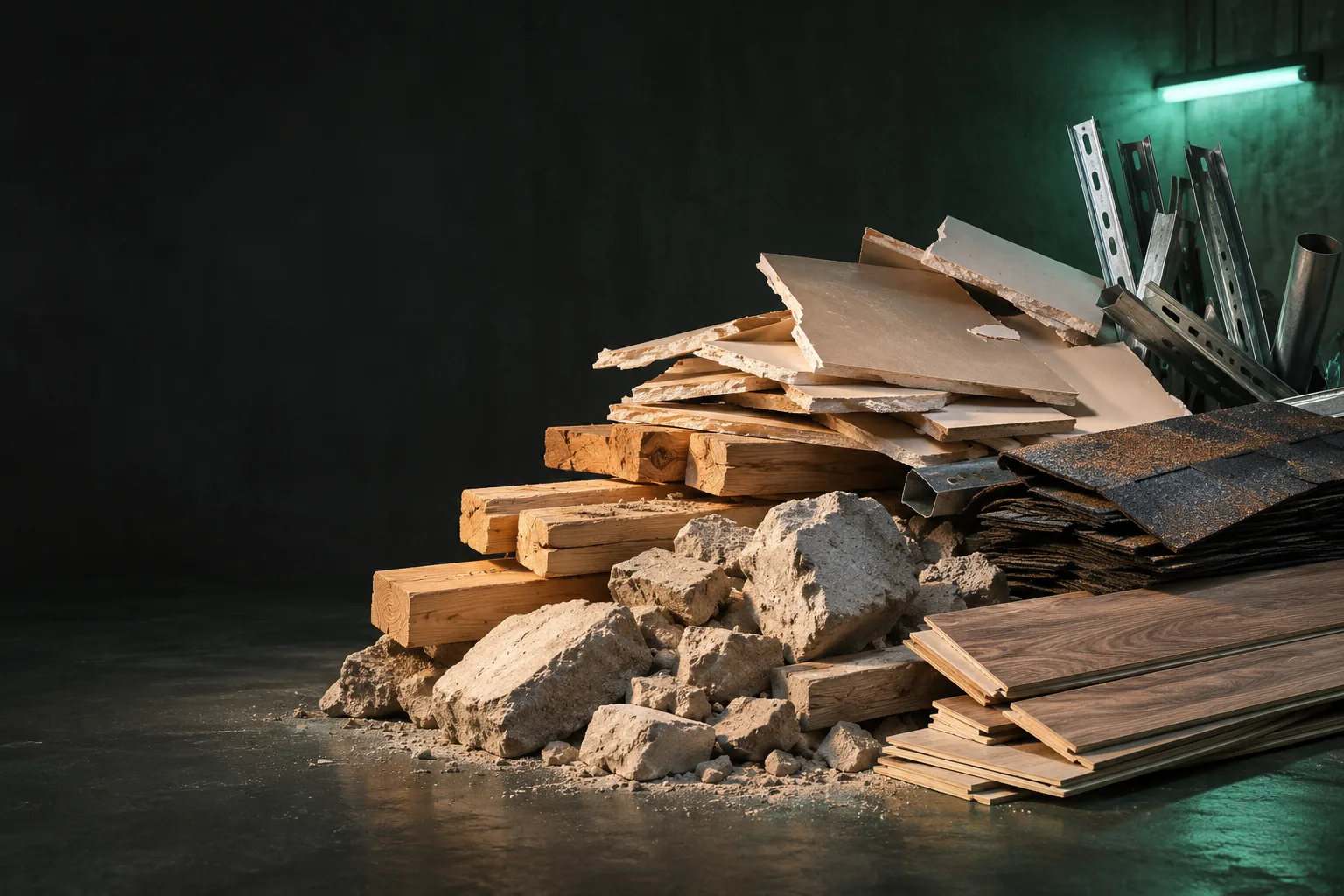
Start with the risk, not the material name
Pull pressurized cylinders, liquids, batteries, unidentified chemicals, and suspect hazardous material out of the ordinary debris conversation. Do not open or move an unsafe container to make the pile look organized.
Give heavy material its own zone
Concrete, tile, and masonry can make a small-looking pile extremely heavy. Keep them separate from drywall and lumber so the load is easier to describe and containers are not overloaded.
Contain the sharp and dusty parts
Cover protruding nails when it is safe, bundle tack strips, and use suitable containers for small fragments. Avoid packing a bag or bin so heavily that it cannot be handled safely.
Preserve a loading path
A sorted pile still causes trouble if a gate, stair, slope, parked vehicle, or fresh landscaping blocks the route. Walk the path once and mention every constraint when you call.